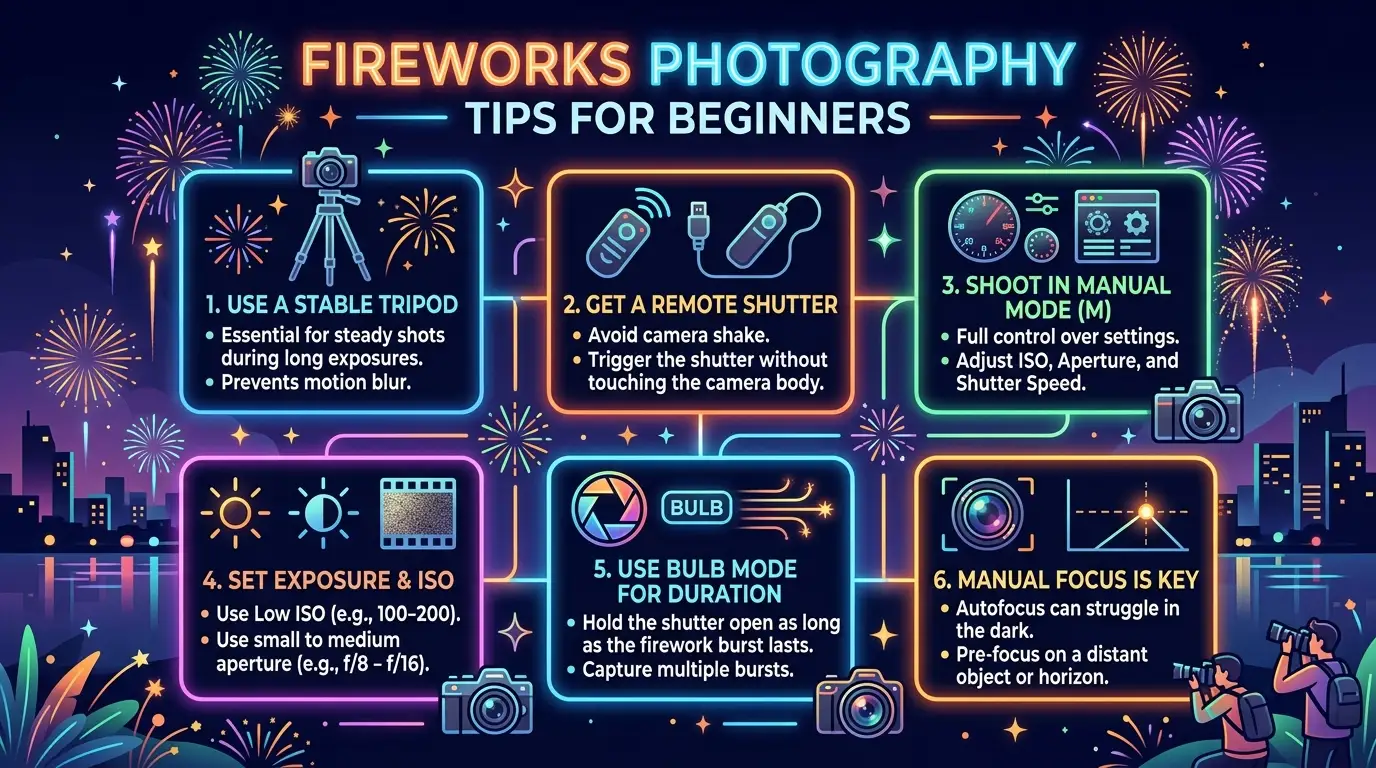
Watching fireworks burst across the night sky feels magical. Photographing them?
That can feel like a completely different story. If you’ve ever ended up with blurry streaks, bright blobs, or photos that look nothing like what you saw, you’re not alone.
These fireworks photography tips for beginners will help you capture beautiful, colorful explosions without needing years of photography experience.
1. Arrive Early and Scout the Perfect Location
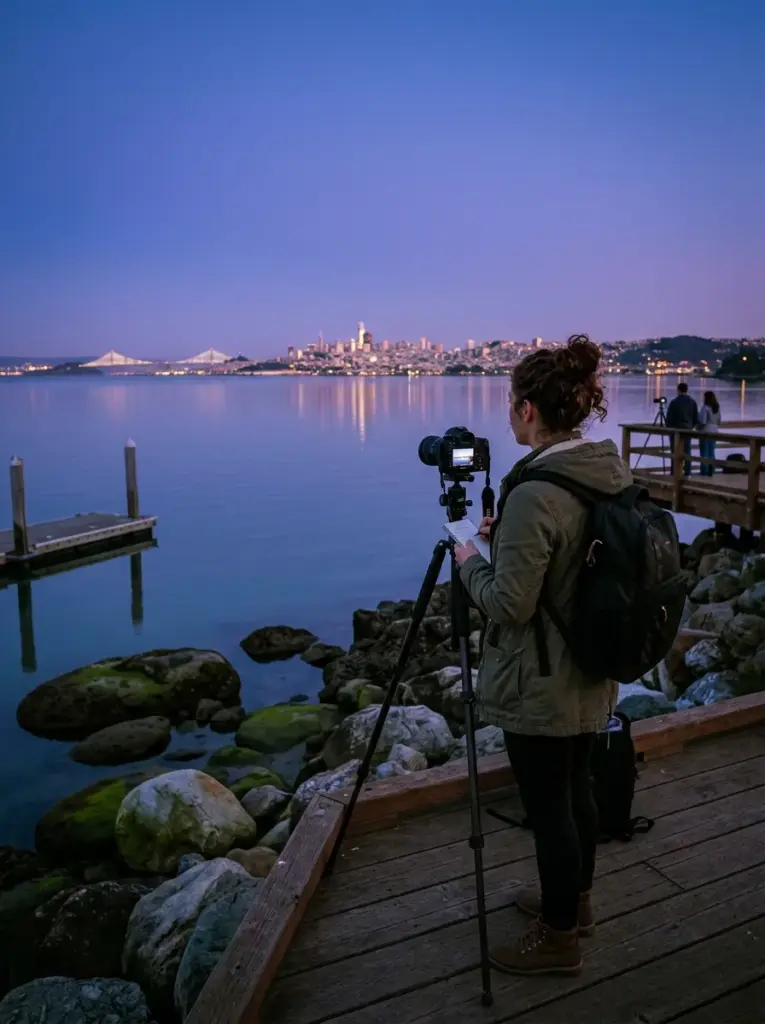
The biggest mistake beginners make happens before the first firework even launches.
Showing up late often means standing behind a sea of heads, phones, and folding chairs. Not exactly the dreamy photo composition you’re hoping for.
Arrive at least 30–60 minutes early and look for:
- An open view of the sky
- Interesting foreground elements
- Water reflections
- Buildings or landmarks
- Minimal light pollution
A great location adds instant visual interest to your fireworks photos.
Think of it like decorating a room. The fireworks are the statement piece, but the surroundings complete the look.
2. Use a Tripod Every Time
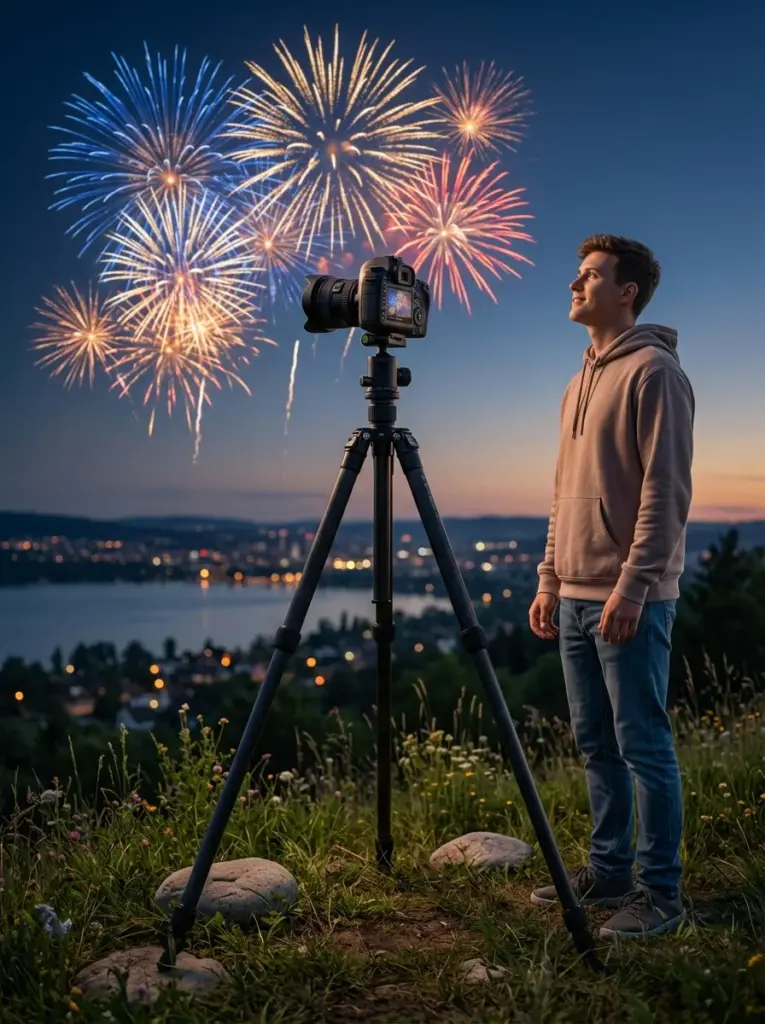
Fireworks photography and handheld shooting rarely get along.
Since you’ll use slower shutter speeds, even tiny camera movements can create blurry images.
A sturdy tripod helps:
- Keep images sharp
- Reduce camera shake
- Maintain consistent framing
- Improve long-exposure results
Sharp fireworks photos start with a stable camera.
Even the most beautiful fireworks display can’t save a shaky image.
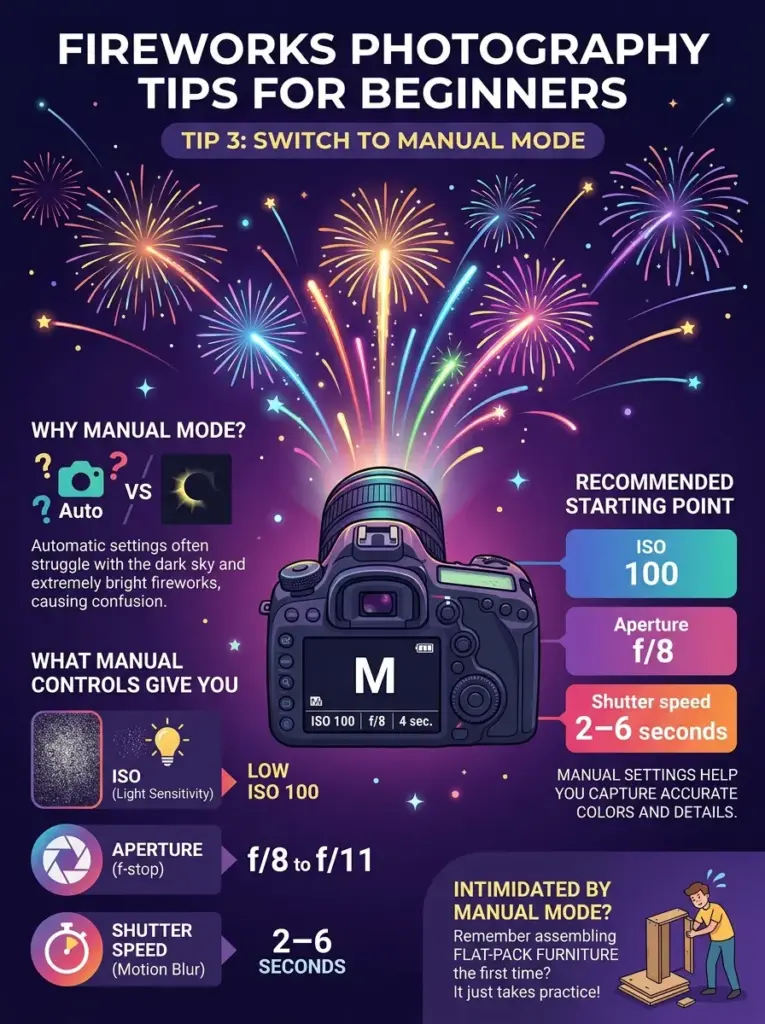
3. Switch to Manual Mode
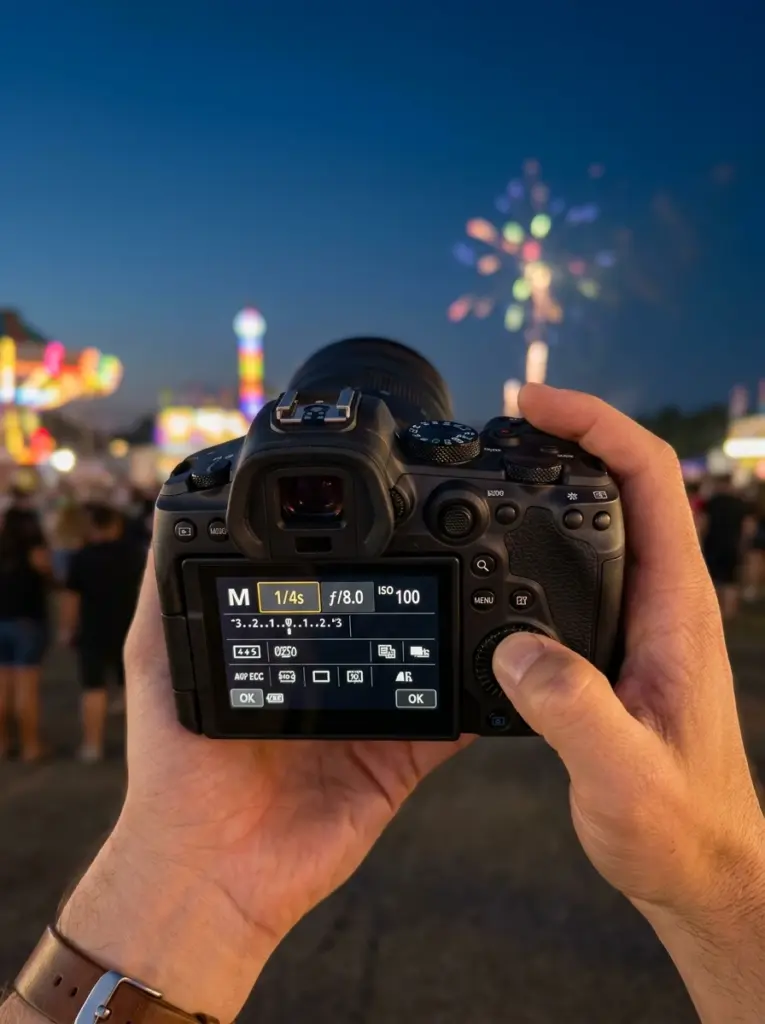
Automatic camera settings often struggle with fireworks.
The sky is dark while the fireworks are extremely bright, which confuses most cameras.
Manual mode gives you full control over:
- Shutter speed
- Aperture
- ISO
- Exposure
For beginners, a good starting point is:
- ISO 100
- Aperture f/8
- Shutter speed 2–6 seconds
Manual settings help you capture accurate colors and details.
Yes, manual mode sounds intimidating at first. So did assembling flat-pack furniture the first time, right?
4. Focus Before the Show Starts
Nothing ruins a great shot faster than missed focus.
Autofocus often hunts around in dark skies searching for something to lock onto.
Before the fireworks begin:
- Focus on a distant object.
- Switch your lens to manual focus.
- Leave it there during the show.
This simple step saves a lot of frustration.
Quick Focus Checklist
- Focus before it gets dark
- Use a distant building or light source
- Switch to manual focus
- Avoid refocusing between shots
Consistent focus creates noticeably sharper fireworks images.
5. Keep Your ISO Low
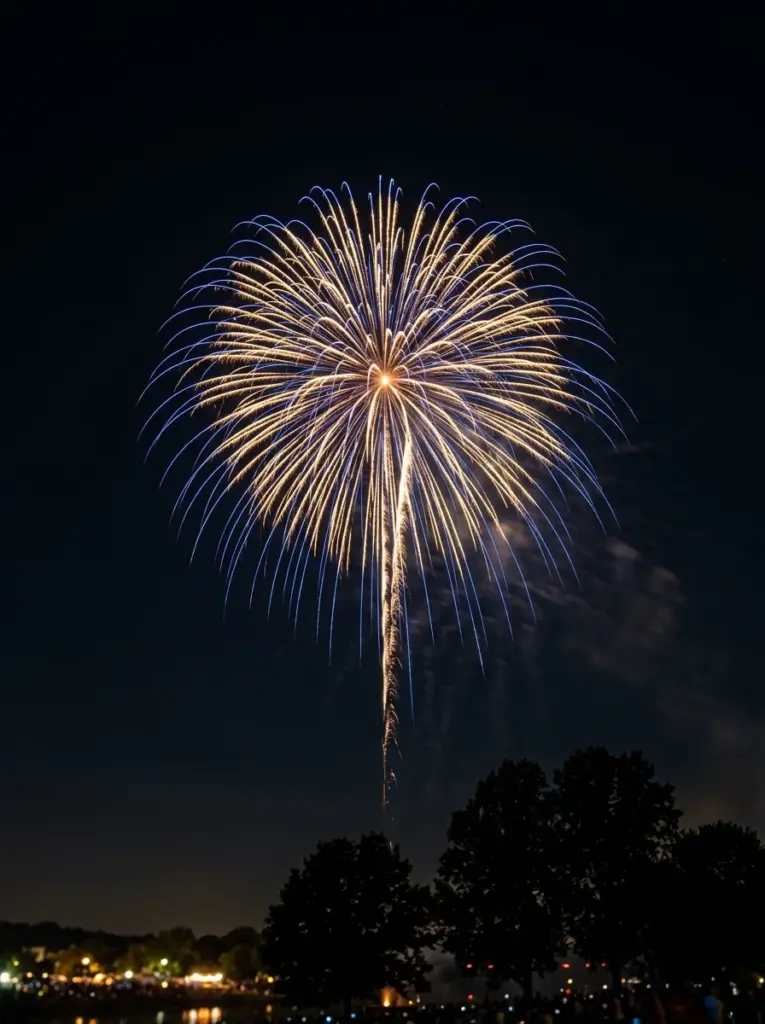
Many beginners assume higher ISO means better nighttime photography.
Not with fireworks.
A high ISO introduces unnecessary grain and noise.
Try:
- ISO 100
- ISO 200 if needed
The fireworks themselves provide plenty of brightness.
Lower ISO settings create cleaner, more vibrant images.
Think crisp and colorful rather than grainy and muddy.
6. Include Foreground Elements
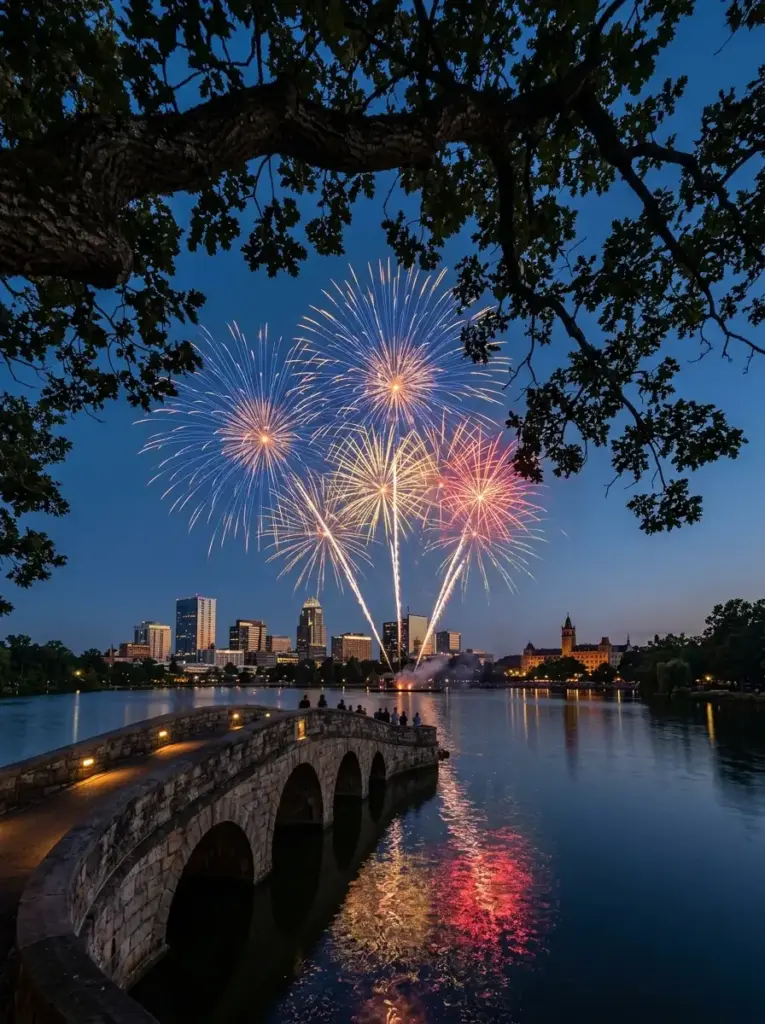
Fireworks alone look impressive.
Fireworks paired with a beautiful scene look unforgettable.
Consider including:
- Trees
- Skylines
- Lakes
- Bridges
- Historic buildings
These elements provide scale and storytelling.
Instead of simply photographing colorful explosions, you create a complete scene that feels more immersive.
Foreground details help viewers connect with the image.
It’s the photography version of adding decorative pillows to a sofa—small detail, big difference.
7. Experiment With Different Shutter Speeds
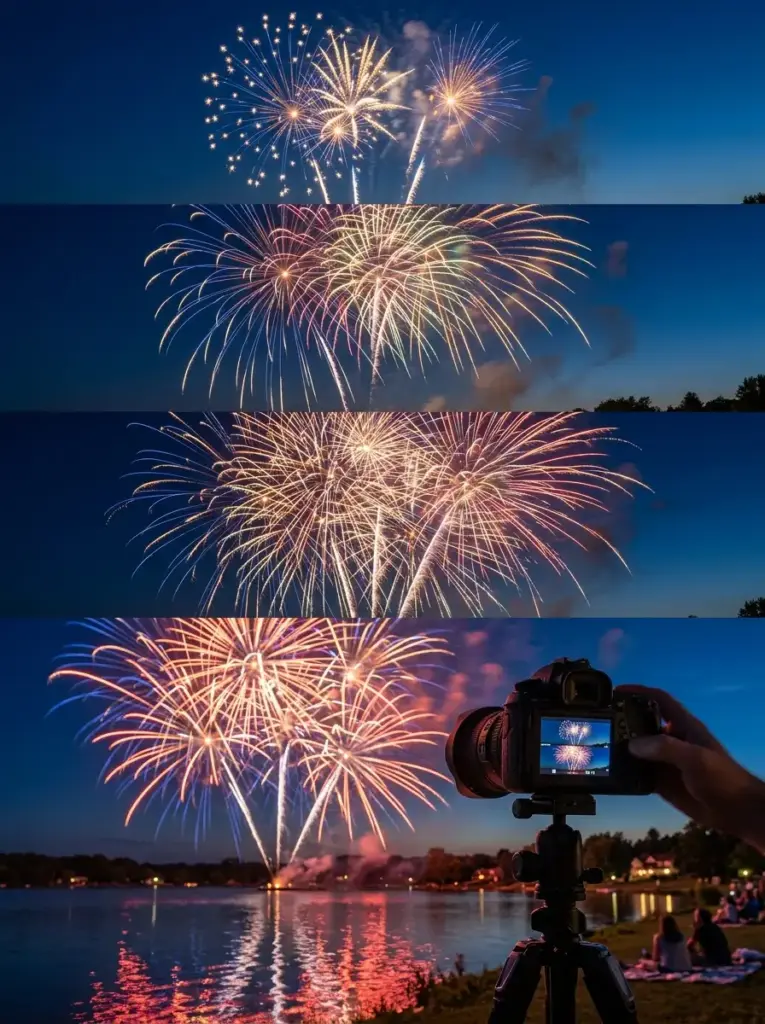
No single shutter speed works for every fireworks display.
Some bursts explode quickly while others linger in the sky.
Try experimenting with:
- 2 seconds
- 4 seconds
- 6 seconds
- 8 seconds
Review your images and adjust as needed.
Why Different Shutter Speeds Matter
- Short exposures capture individual bursts.
- Medium exposures capture fuller trails.
- Longer exposures create dramatic light patterns.
Testing multiple shutter speeds helps you discover what works best for each show.
Photography rewards curiosity.
8. Use a Remote Shutter Release
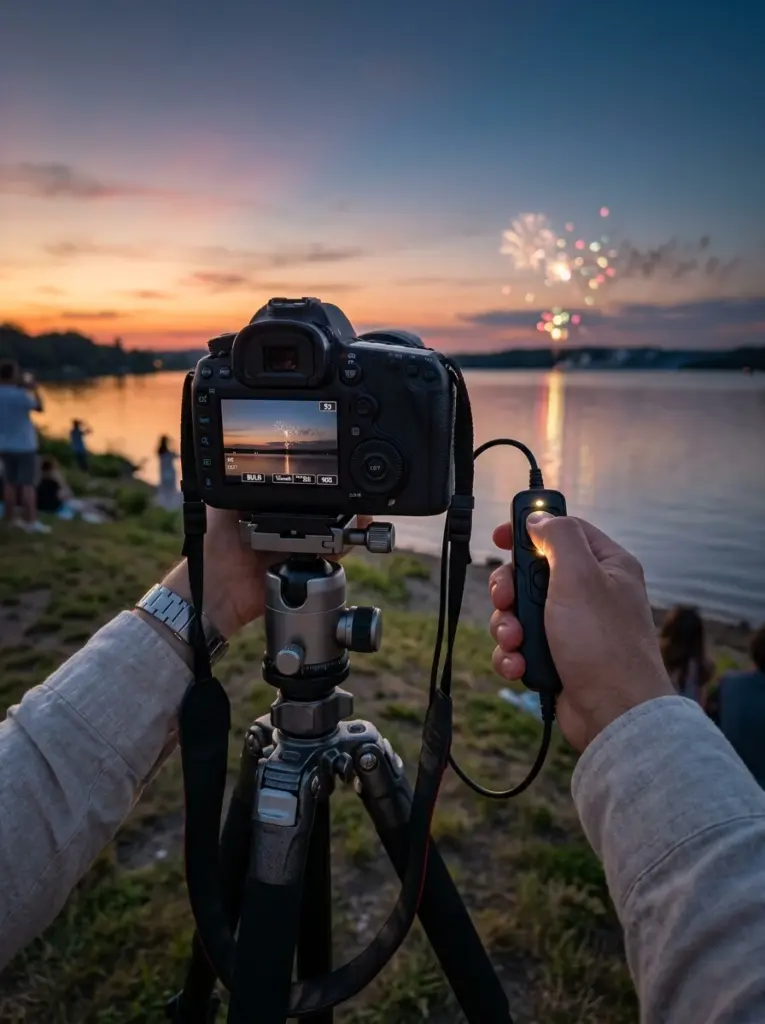
Pressing the shutter button can introduce small vibrations.
Those tiny movements may not seem noticeable, but long exposures reveal everything.
A remote shutter release helps:
- Reduce shake
- Improve sharpness
- Make timing easier
Don’t have one?
Use your camera’s built-in timer.
Reducing vibration often creates noticeably cleaner images.
Sometimes the smallest adjustments deliver the biggest improvements.
9. Shoot in RAW Format
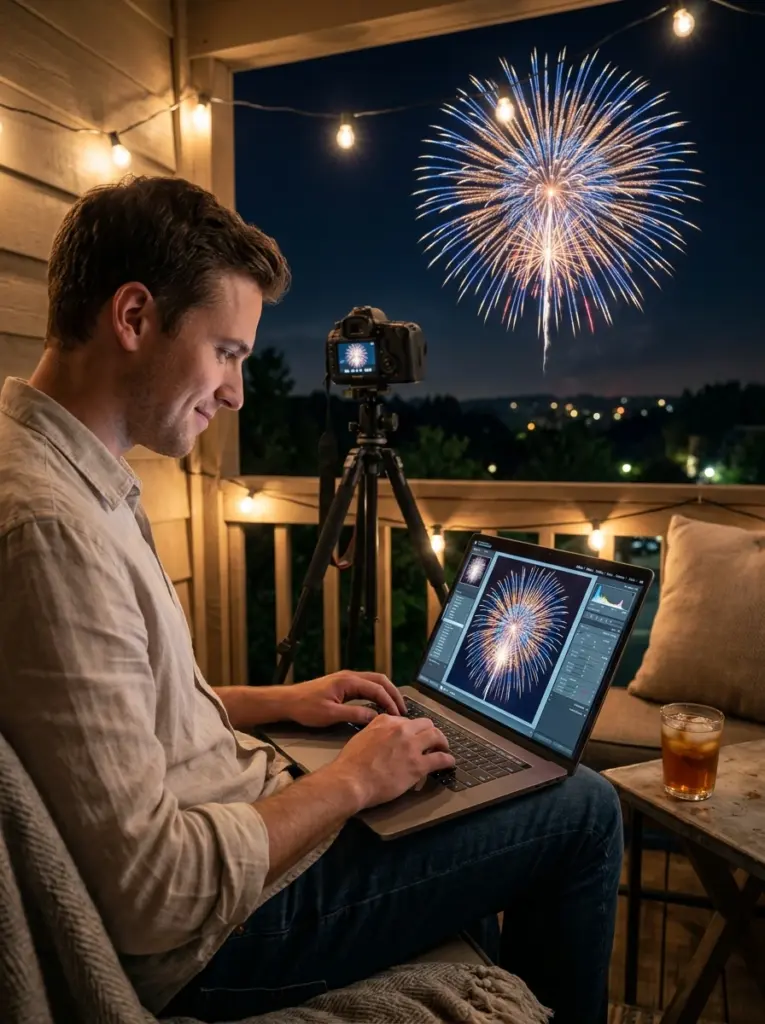
RAW files preserve much more image data than JPEG files.
This gives you greater flexibility when editing.
Benefits include:
- Better color correction
- Improved highlight recovery
- Enhanced shadow detail
- More editing control
RAW images make post-processing significantly easier.
Fireworks often contain intense colors and bright highlights, so every bit of extra information helps.
Beginner Editing Advantages
- Recover overexposed highlights
- Adjust white balance
- Increase contrast
- Improve overall color vibrancy
RAW gives you room to fix small mistakes later.
10. Watch the Wind Direction
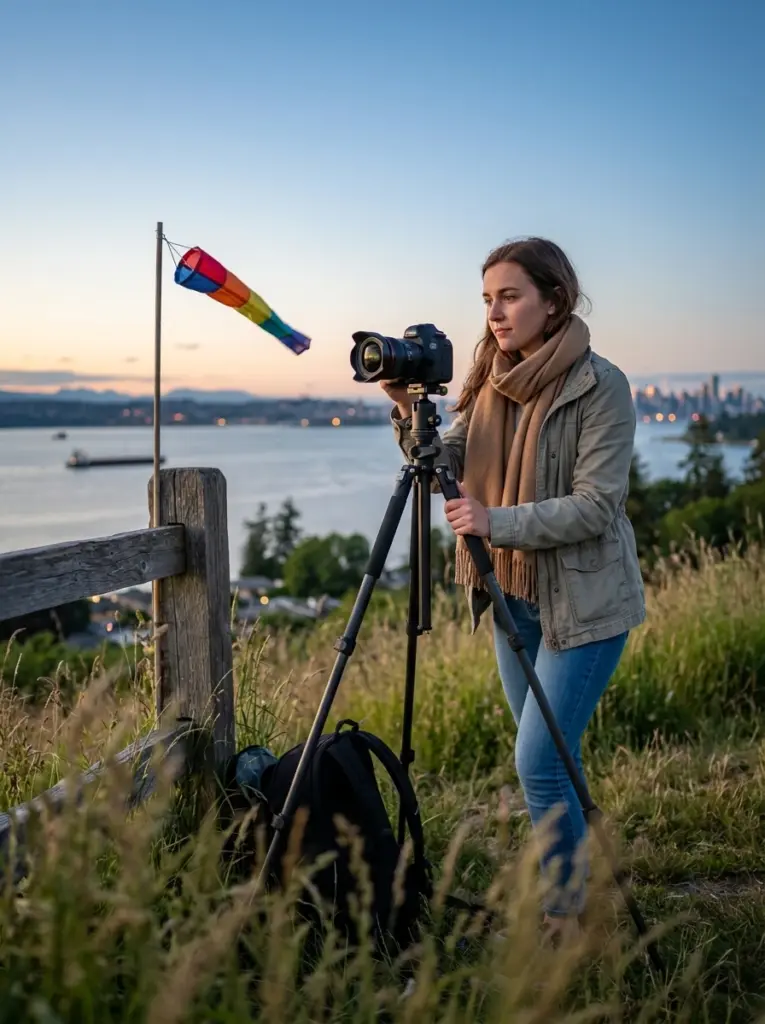
This tip surprises many first-time fireworks photographers.
Smoke builds quickly during a display.
If the wind pushes smoke toward your camera, later photos may look hazy and dull.
Before setting up:
- Check wind direction.
- Position yourself upwind when possible.
- Leave room to adjust if conditions change.
Good positioning keeps your photos cleaner throughout the event.
Sometimes moving a few yards makes a huge difference.
11. Take Plenty of Photos
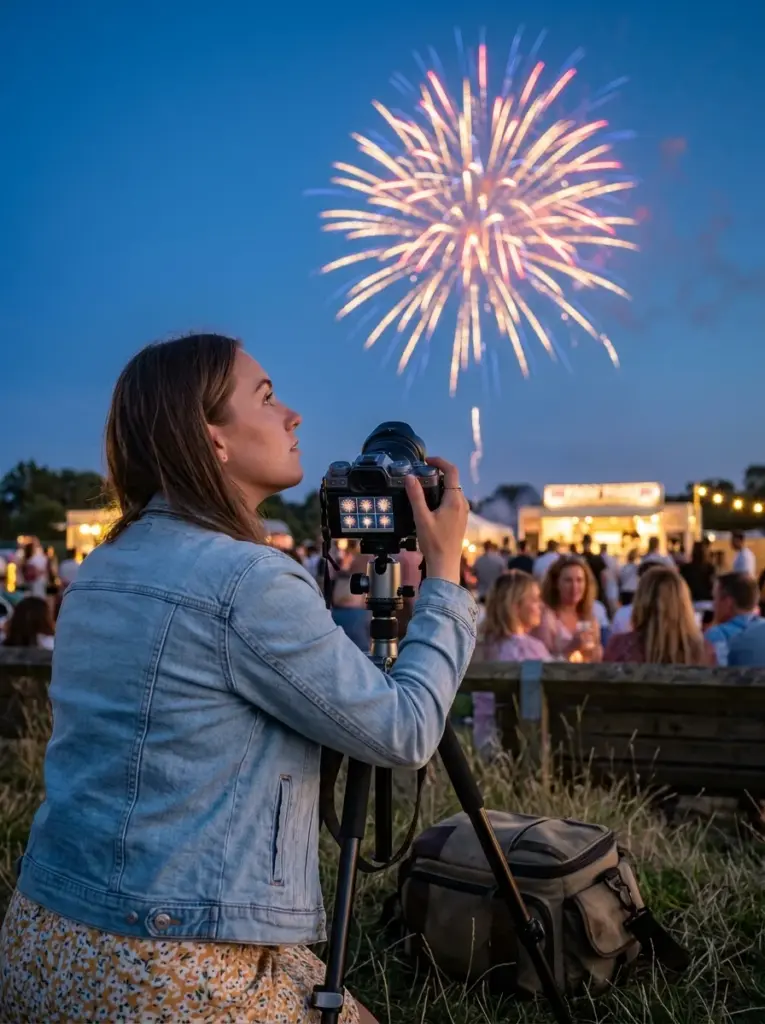
Nobody captures perfect fireworks images with every single click.
Professional photographers often shoot dozens—or hundreds—of frames during one event.
Give yourself permission to experiment.
Try different:
- Compositions
- Exposure times
- Angles
- Foreground elements
The more photos you take, the more likely you’ll capture something spectacular.
Practice remains the fastest path to better fireworks photography.
Every fireworks show becomes a learning opportunity.
Common Beginner Mistakes to Avoid
Even with great camera settings, a few mistakes can sabotage your results.
Watch Out For These Issues
- Using autofocus during the show
- Shooting handheld
- Arriving too late
- Using extremely high ISO values
- Forgetting extra batteries
- Overexposing bright bursts
Avoiding common mistakes often improves photos faster than buying new gear.
Funny how that works, isn’t it?
Simple Camera Settings to Start With
If you’re feeling overwhelmed by settings, start here.
Beginner Fireworks Photography Settings
- Manual mode
- ISO 100
- Aperture f/8
- Shutter speed 2–6 seconds
- Manual focus
- RAW format
These settings provide a reliable starting point for most fireworks displays.
From there, adjust based on brightness and conditions.
Small adjustments produce big improvements over time.
Final Thoughts
Great fireworks photography isn’t about having the most expensive camera.
It’s about preparation, patience, and a willingness to experiment.
Use a tripod, shoot in manual mode, keep your ISO low, and don’t be afraid to take lots of photos.
The next time fireworks light up the sky, try even one or two of these beginner-friendly tips and see the difference for yourself.
After all, what better excuse is there to spend an evening chasing colorful explosions and creating memories you’ll actually want to keep?